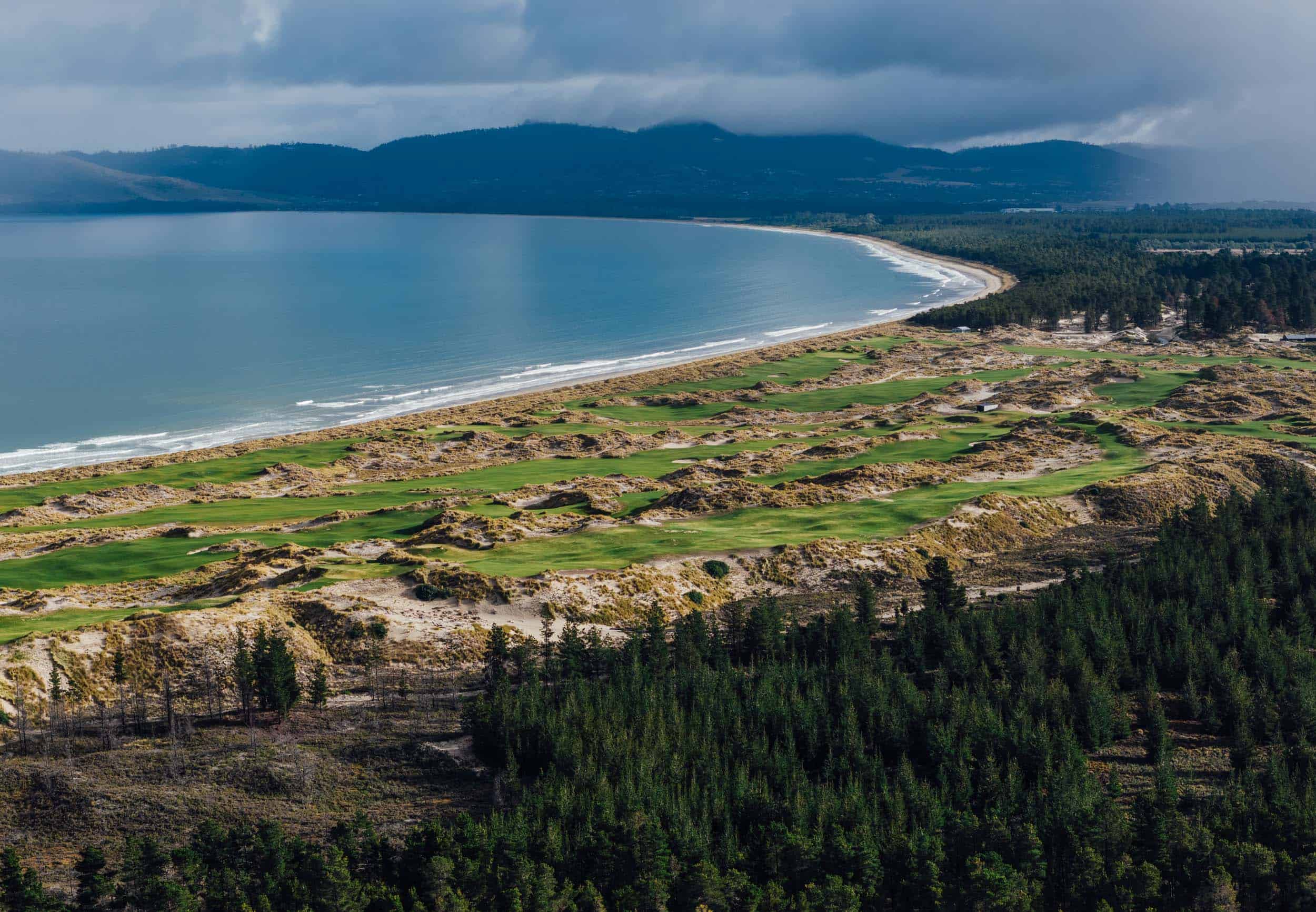
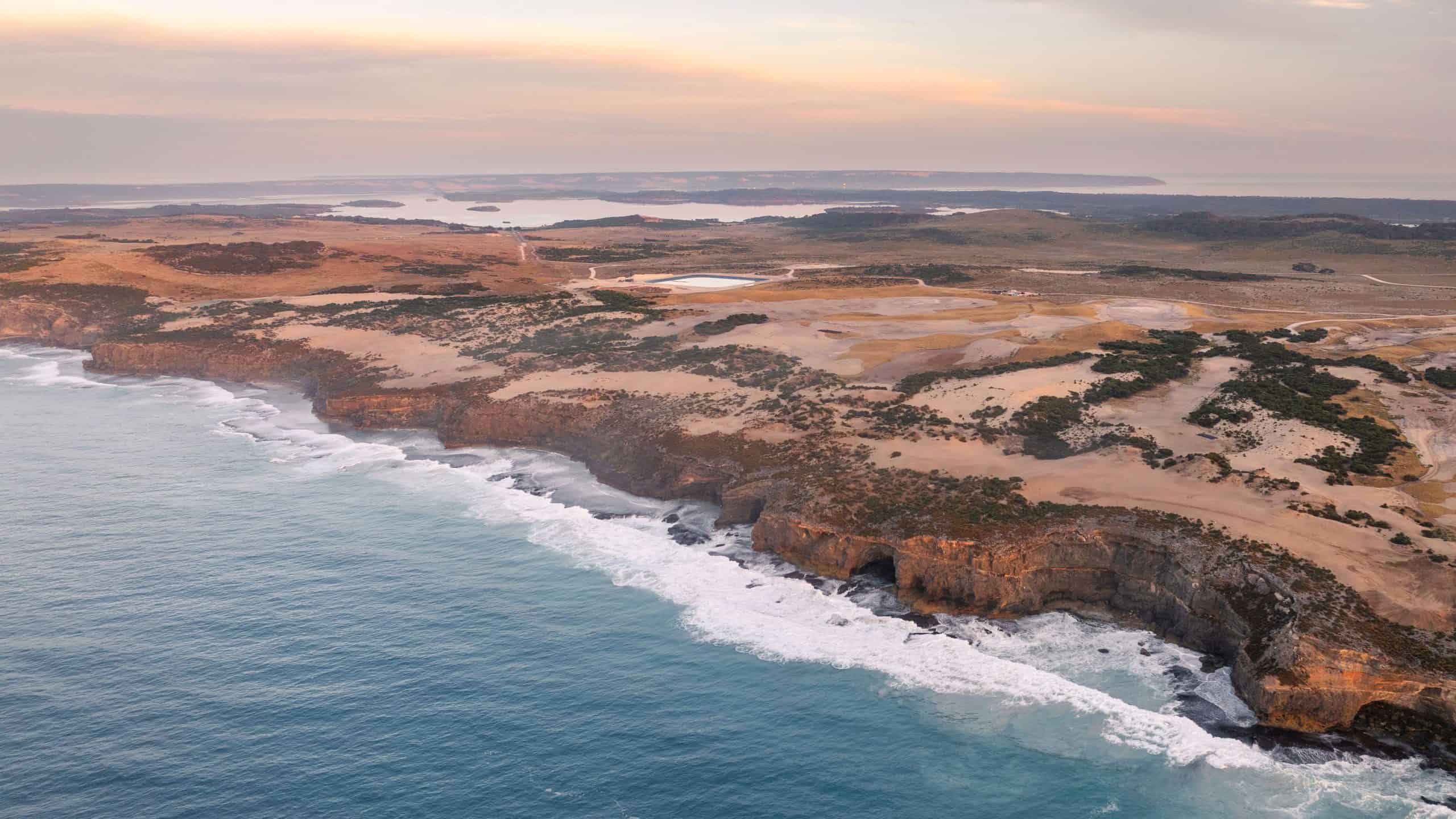
When most golfers visit Melbourne, they head straight for the iconic Sandbelt classics. However, just 50 miles south and about an hour from the CBD, the Mornington Peninsula stretches out in sweeping duneland that Tom Doak himself once called “one of my favorite pieces of ground I’ve ever worked on.” It’s a bold claim, and St. Andrews Beach Golf Course makes a strong case that he meant every word.
A World-Class Public Course
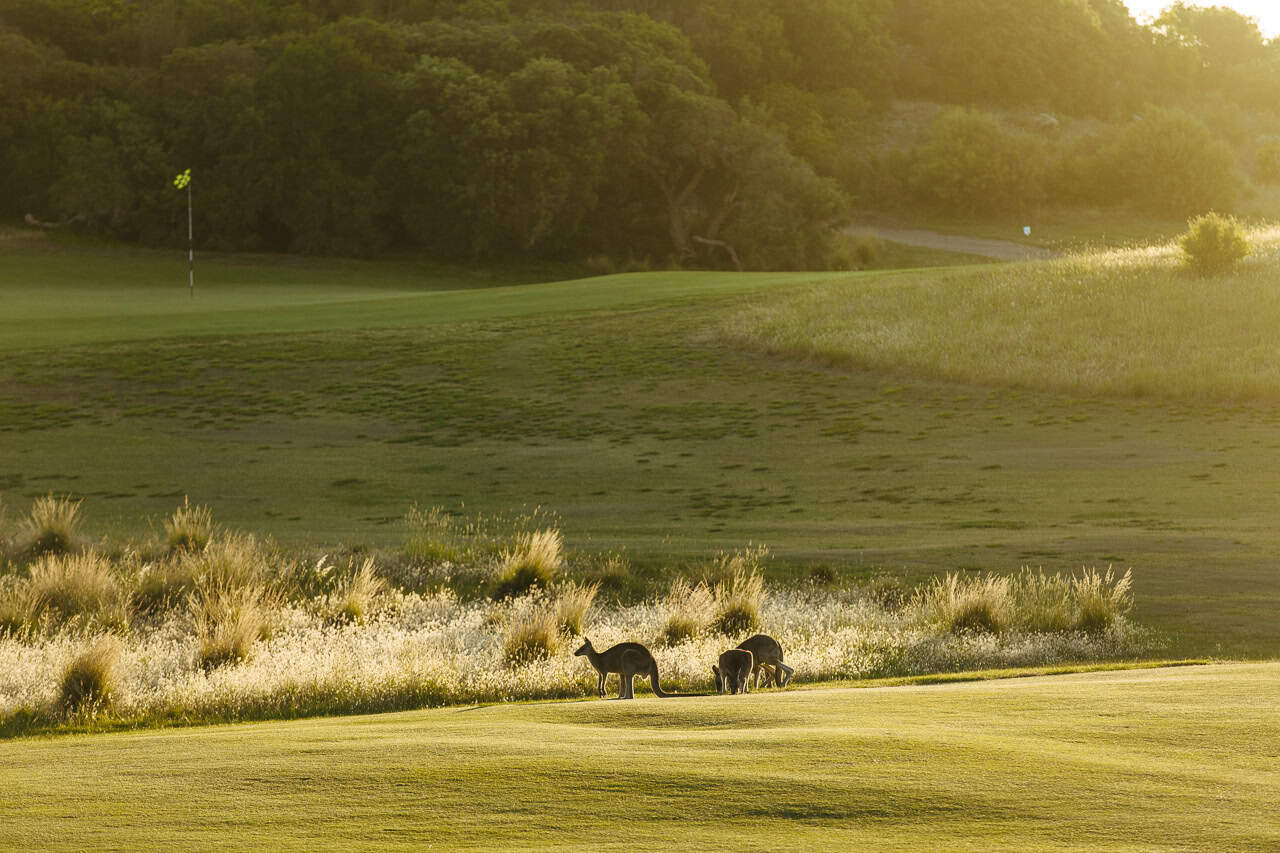
What sets St. Andrews Beach apart is its rare combination of world-class design and genuine public access. The course champions ecological awareness, embraces minimalist design, and strips away every ounce of pretension. In an era where social media has exposed nearly every “hidden gem,” this one still delivers. Remote, rugged, and free from housing developments, St. Andrews Beach offers a pure golf experience that feels like a throwback to the Golden Age of golf course architecture.
Photo Credits: St Andrews Beach Golf
From Private Dream to Public Masterpiece
Tom Doak and local legend Mike Clayton collaborated on the course, which opened in 2005. Originally, developers envisioned it as the centrepiece of a high-end private club, with plans for a second “Fingal” course that would have expanded the property to 36 holes. Instead, the club pivoted to a public model, much like Barnbougle Dunes and Cape Wickham, and the result is something golfers everywhere can now enjoy.
Upon arrival, don’t expect a glitzy locker room. Instead, a spartan pro shop greets you, where you can grab a sausage roll before heading out. This is a place that puts golf first, full stop.
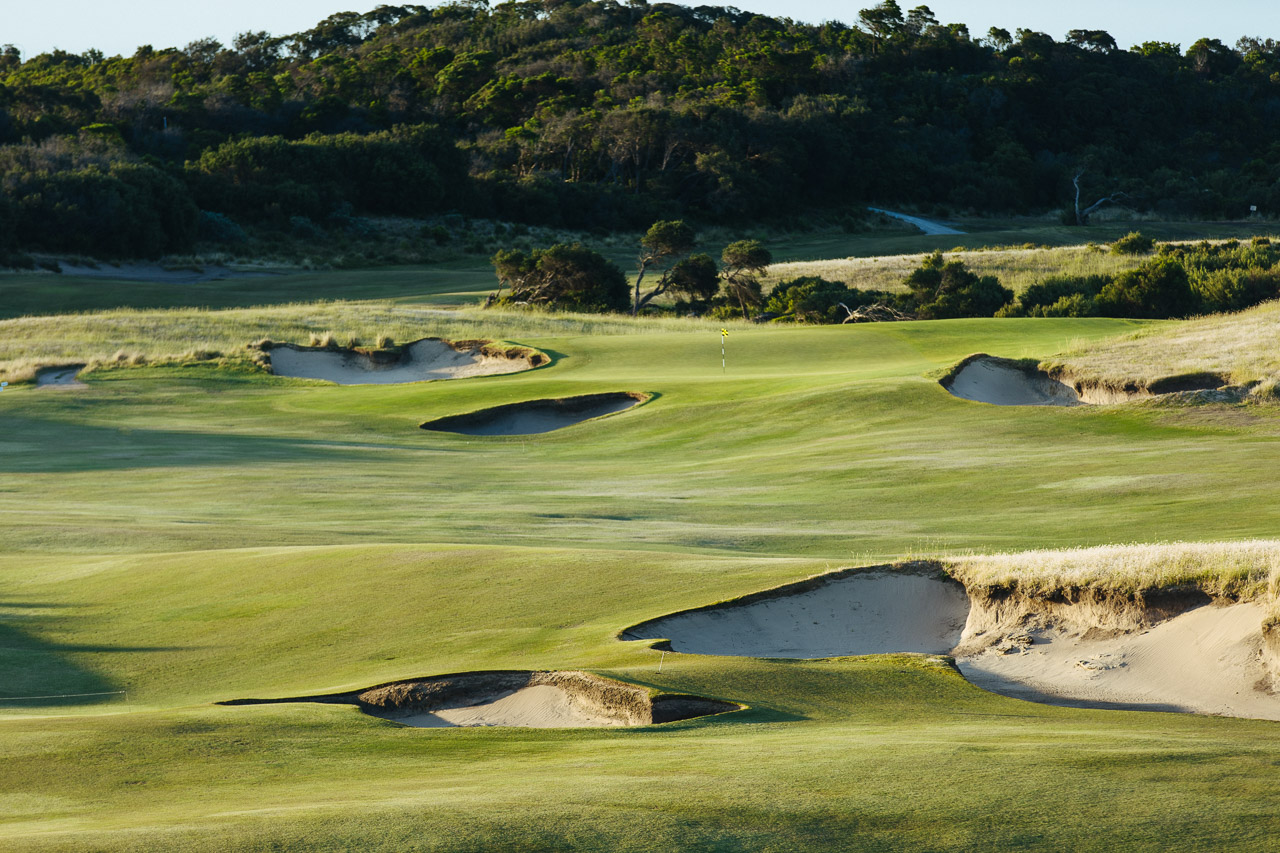
The minimalist ethos extends to the construction itself. In his Little Red Book of Golf Course Architecture, Doak noted that architects left 16 of the 18 fairways entirely in their natural state. Only the 15th and a small section of the brutal 13th required any significant reshaping. Almost no earth moved during the build, and that restraint shows in every hole.
Photo Credits: St Andrews Beach Golf
Playing the Course
At just over 6,000 metres (roughly 6,600 yards) with a par of 70, St. Andrews Beach plays tougher than its numbers suggest. The compact greens demand precision and creativity on every approach. The routing cleverly uses short par 4s and par 3s to navigate the steepest ridges, while the longer holes naturally stretch out through the valleys. The result feels effortless because the holes work with the land rather than against it.
Photo Credits: St Andrews Beach Golf
Holes Worth Noting
The 2nd and 14th holes are standout short par 4s. In fact, Doak considers the 2nd (par 4, 305 yards) one of the best short par 4s he has ever designed. It offers a true “choose your own adventure” off the tee: bail out left for a blind approach, or drive right for a clear look at the green, but only if you’re brave enough to take on the extra distance.
Those shorter holes contrast sharply with the course’s two monsters. The 13th (par 4, 499 yards) plays over a basin to a challenging hog’s back fairway, while the 16th (par 4, 435 yards) requires a long iron or fairway wood into a green with a Redan-like slope. As of 2026, both rank among the longest par 4s in Australia.
Photo Credits: St Andrews Beach Golf
Is It Worth the Drive?
Absolutely, with one caveat. Don’t come expecting top-tier amenities. Instead, come prepared for the wind. Prevailing breezes arrive from the west and southwest off the Bass Strait, or occasionally from the northeast, and they shift constantly. Because the routing forms a loop rather than a traditional out-and-back layout, the wind changes its relationship to the player on nearly every hole. That variety is part of what makes St. Andrews Beach so endlessly compelling. Would you really have it any other way?
Explore Australia Golf
Many golfers overlook this course in favour of the Sandbelt classics, and that’s understandable given Australia’s embarrassment of riches. But if you have the time and a passion for pure, land-driven golf, St. Andrews Beach is absolutely worth the detour.
Planning a golf trip to Australia? Contact one of our experts today. We’d love to help you design the perfect itinerary.